

MagicCube: A Phygital Rapid Prototyping Tool for XR Game Development
MagicCube: 用于XR游戏开发的虚实结合的快速原型工具
本项目在延续了泛在式XR游戏引擎项目(详情请见此处)的基础上,进一步引入了有限状态机作为跨现实游戏资产的统一行为建模方法,实现了虚拟与现实游戏对象的可互操作性;同时,我们整合了Cardboard VR,无线射频识别技术以及智能魔方硬件,设计并开发了一种虚实结合的编程界面。 因此,即使是没有编程技术背景的终端用户,也可以使用该工具进行简单的XR游戏或游戏化应用的快速搭建、部署和测试。通过屏蔽复杂的底层技术细节,并将编程开发转变成「做中玩、玩中学」的具身体验,用户能够以更低的学习成本和更专注于游戏化体验设计本身的方式参与到XR游戏应用的创作中来。
This project builds on the previous pervasive XR game engine project (for details, please see here) and further introduces finite state machine (FSM) as a unified behavior modeling method for cross-reality game assets, enabling interoperability between virtual and physical game objects. At the same time, we integrated Cardboard VR, radio-frequency identification (RFID) technology, and smart-cube hardware to design and develop a hybrid virtual–physical programming interface.
As a result, even end users without any programming background can use this tool to quickly build, deploy and test simple XR games or gamified applications. By encapsulating complex low-level technical details and transforming programming and development into an embodied experience of “hands-on learning-by-playing” users can engage in the creation of XR game applications with a lower learning cost and a stronger focus on the design of the gamified experience itself.
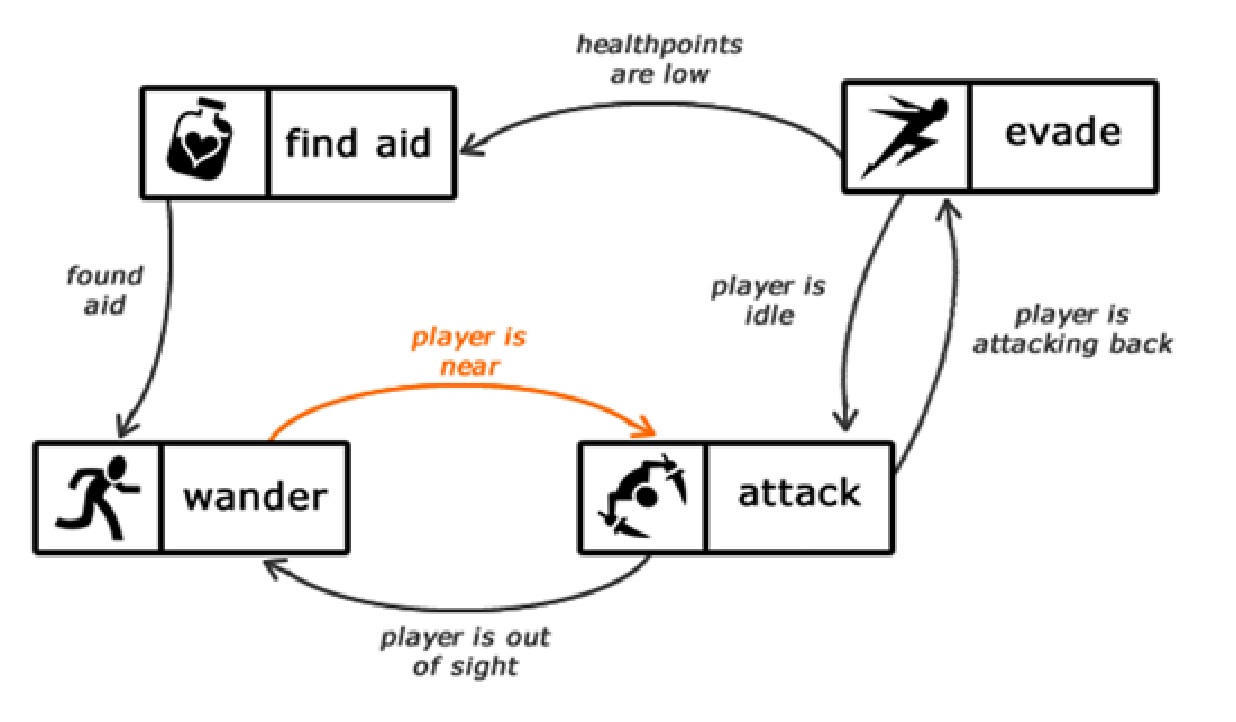
有限状态机(FSM)
作为游戏AI领域中早期通用的行为建模方法,有限状态机描述了一个游戏对象的行动如何在一系列有限的、明确的状态之间转移;并且每次转移都需要一个特定的转移条件来触发。此前的研究已经将FSM用于解决各类异构物联网设备之间的互操作性问题(详情请见此处)。因此,本项目进一步以FSM为基础搭建了虚拟资产与物理资产的统一行为建模框架,以获取跨现实的可互操作性。
As an early and widely used behavior modeling method in game AI, an FSM can be used to describe how a game object’s actions transition among a set of finite, explicit states, with each transition triggered by a specific condition. Previous research has applied FSMs to address interoperability issues among heterogeneous IoT devices (for details, see here). Building on this, the present project adopts FSMs as the foundation for a unified behavior modeling framework for both virtual and physical assets, thereby achieving cross-reality interoperability.
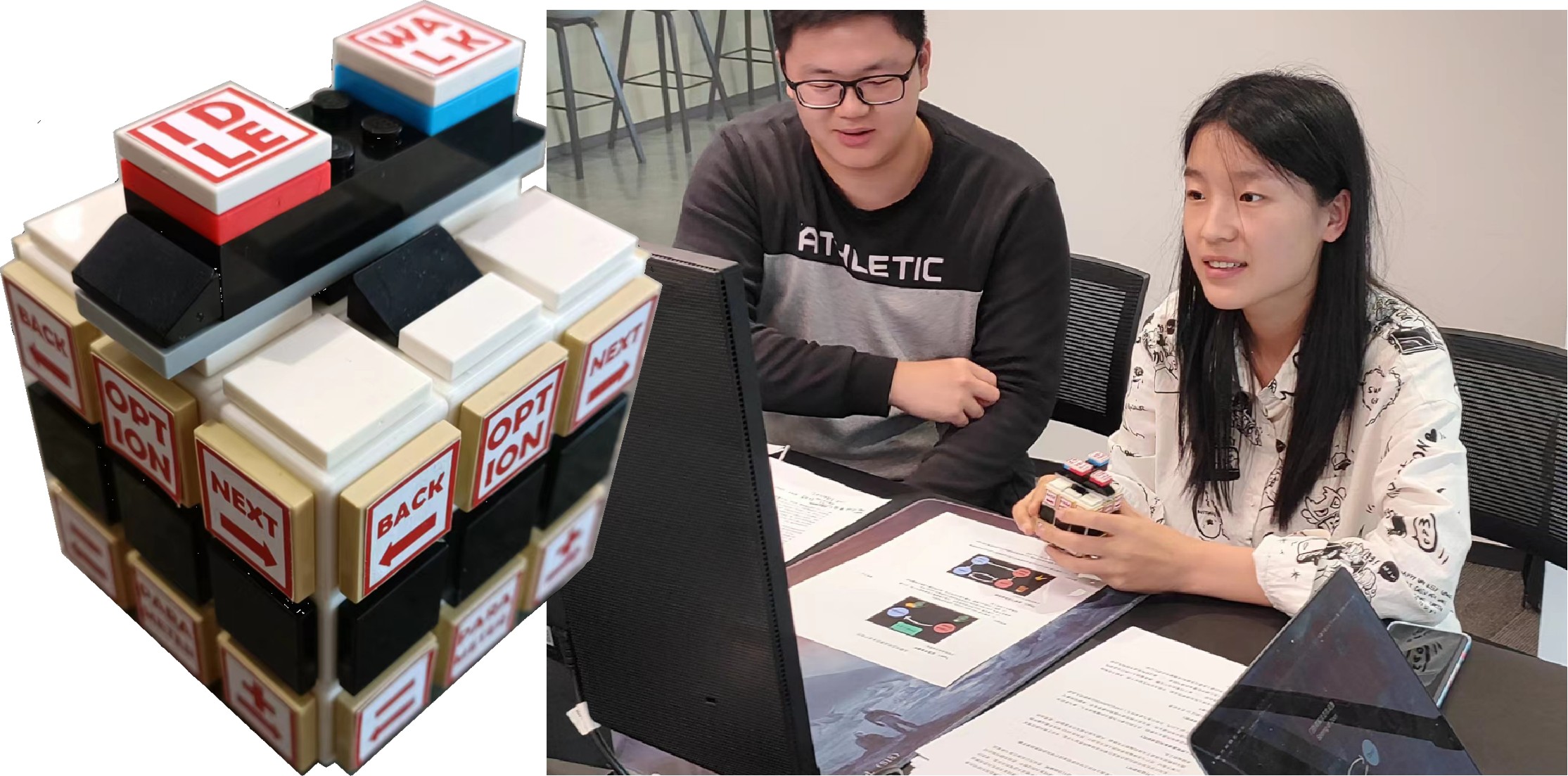
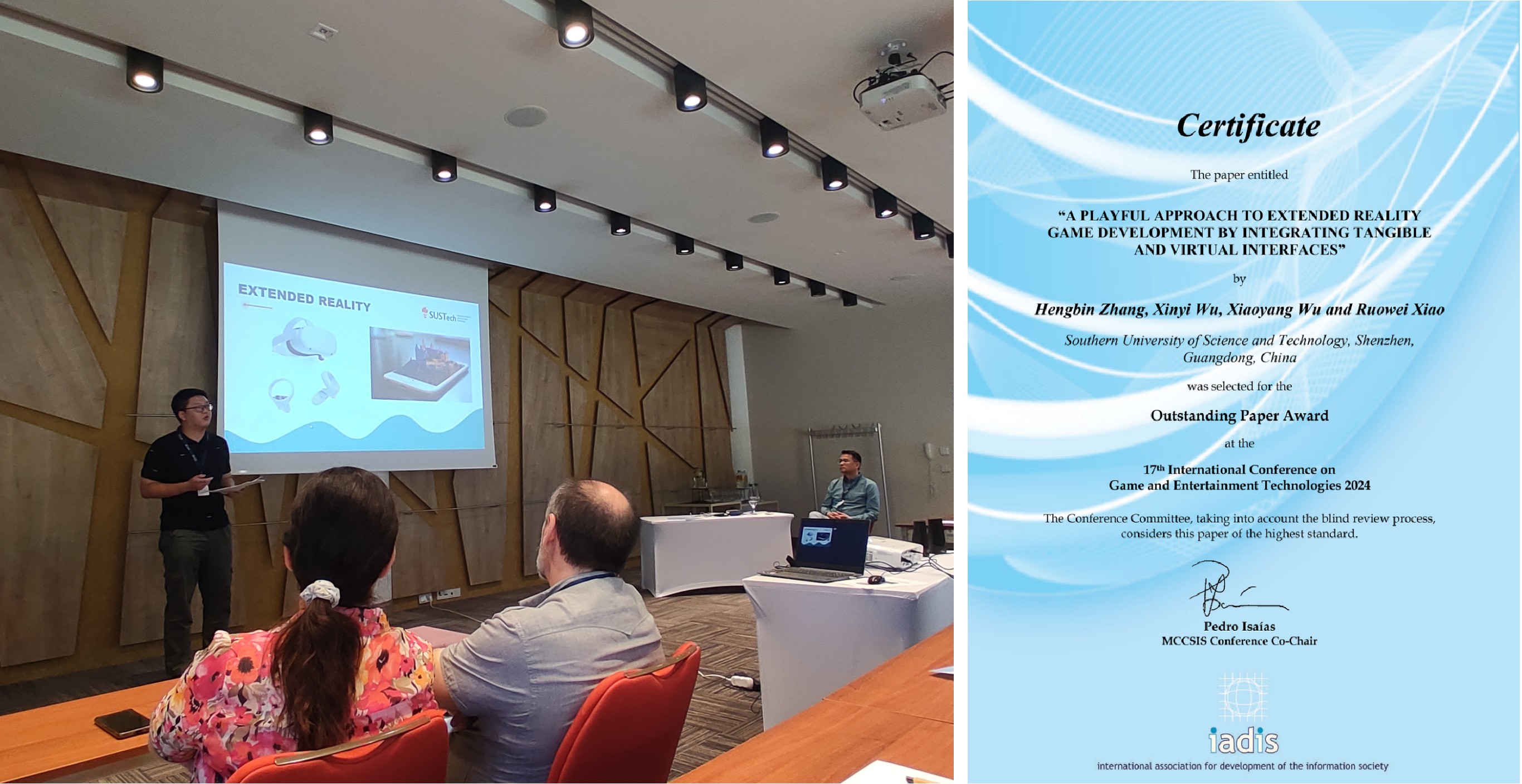
本项目是一个通过设计进行研究(Research through Design, RtD)的项目,并遵循双钻式设计模型。在第一个「发散-收敛」的设计迭代中,我们结合了体验原型与「绿野仙踪」用户实验(Wizard-of-Oz User Experiment)方法,充分探索了基于FSM的虚实结合编程界面的设计空间,获得了针对这种新型编程界面的外形规格、空间交互等初步的用户反馈。针对收集到的用户反馈,我们采用主题分析以及亲和图等质性分析方法,总结出了用于指导下一个原型迭代的设计准则。基于此阶段工作撰写的论文于2024年在匈牙利布达佩斯召开的第17届国际游戏娱乐技术会议(GET’24)上获得了最佳论文奖。
This project adopts a Research through Design (RtD) approach and follows the Double Diamond Design Model. In the first “divergent–convergent” design iteration, we combined experience prototyping with a Wizard-of-Oz user experiment to fully explore the design space of an FSM-based phygital programming interface, obtaining initial user feedback on aspects such as its form factor and spatial interaction. Based on the collected feedback, we applied qualitative methods including thematic analysis and affinity diagramming to derive design guidelines that inform the next round of prototyping. A paper based on this phase of the work received the Outstanding Paper Award at the 17th International Conference on Game and Entertainment Technologies (GET’24), held in Budapest, Hungary, in 2024.
在第二个设计迭代中,我们完成了功能原型的设计与开发(见顶图)。该功能原型采用了模块化设计的方法,并整合了Cardboard VR,RFID以及智能魔方硬件模块。在26年1月,我们邀请了约30余位被试参与了用户评估,通过问卷调研及半结构化访谈初步验证了该原型的可用性及有效性。关于相关工作的论文目前尚在撰写阶段。
In the second design iteration, we completed the design and development of a functional prototype (see the top image). The prototype adopts a modular design approach and integrates Cardboard VR, RFID, and a smart-cube hardware module. In January 2026, we invited more than 30 participants to take part in a user evaluation. Through questionnaires and semi-structured interviews, we conducted an initial validation of the prototype’s usability and effectiveness. A paper reporting this work is currently in preparation.